
"North American coffee origins"
1000 article(s) found

What is the difference among American beans, African beans and Asian beans? What about the flavor?
Professional coffee knowledge exchange more coffee bean information please follow the coffee workshop (Wechat official account cafe_style) what is the difference between American beans, African beans and Asian beans? What about the flavor? [introduction] the world of coffee is rich and interesting. Coffee from different continents has its own characteristics. Coffee is the product of 15 degrees north latitude from the equator. Therefore, it is found in South America, Asia and Africa.

Introduction of coffee beans-Brazilian Bourbon Santos Coffee Central and South American Coffee extract
Brazil is a rich and beautiful land, with the Atlantic Ocean in the east, more than 7400 meters of coastline and the famous Andes in the west. Brazil is also the world's largest coffee producer, known as the coffee country. Brazil is vividly compared to the giant and monarch of the coffee world. Brazilian coffee was introduced from French Guiana in 1729. Coffee was originally grown in the north, but

The Story of Latin American Coffee Bean producing country
The flavor and taste of coffee beans in Latin America was once the second largest coffee producer only in Brazil, but Colombia, which has been overtaken by Vietnam and ranked third in the world, is the largest supplier of washed beans in the world. Colombia has become synonymous with good coffee after years of image-building. Although the flavor is balanced, the texture is thick, and the famous sour taste, the aroma is also good.

Sweet, full-bodied Latin American coffee varieties growing market price profile
Costa Rica aroma 3.5 points brightness 4.5 points mellow 3 points flavor 4.5 points aftertaste 4.5 points suitable for baking degree: Light/Medial/City want to show Costa Rica perfect balance of flavor, then absolutely can not be deep baking, it is recommended to City degree, even the first explosion can be the end of the beans, this time the aroma and flavor will be both, close to the second explosion is the deepest baking

Come and update! Coffee English is out of date for you!
Coffee has always been a popular theme of the program. It is obviously not enough to know only Latte, Cappuccino and Americano. Coffee trend and coffee English are also upgrading and innovating all the time. Update your coffee English with Jenny and Adam today! Update your coffee English! Now there is a craze for artisan coffee in North America: Mainstream coffee: mainstream coffee.

American Guatemala Fine Coffee Introduction Guatemala Coffee Origin Introduction Guatemala Coffee Style
Guatemala coffee is produced in the northwestern Central American countries of Guatemala (The Republic of Guatemala). The country's forest area accounts for two-thirds of the country's area, rich in high-quality coffee beans, its sour, mellow taste and slightly wild, can be used as a single drink or for the preparation of comprehensive coffee. 1. Guatemala coffee taste: bitter and fragrant, taste good. high

Introduction to Fine Coffee with Flavor and Taste characteristics of full-grained Chateau Saint-Roman, Costa Rica
The United Fruit Company of the United States took over Keith Industry in 1899 and controlled the production and export of railways and bananas. In 1913, banana exports ranked first in the world. In 1917, F. Tino Granados staged a coup and established a military dictatorship. After Tinoco Granados stepped down, successive rulers were controlled by American monopoly capital. The rise of the Workers' Movement in the 1930s: six times from 1953 to 1978

Coffee producing area | Belize coffee producing area introduces the flavor characteristics of Belize coffee in Central America.
Belize is a Central American country located between Mexico in the north, Guatemala in the west and south, and the beautiful Caribbean Sea in the east. Belize coffee is grown organically under the canopy of the rainforest at Gulong Water Pot Manor in the western plateau of Belize. The estate covers an area of 130000 acres and includes cattle, corn, orchards, wildlife and tourist attractions. Fertilizer

A brief introduction to the Origin, Development, History and Culture of Fine Coffee beans in Santa Rita Manor
The suitable climate in Colombia provides a real natural pasture for coffee. Coffee trees in Colombia are mainly cultivated in the Andes, on steep slopes about 1300 meters above sea level, where the annual temperature is about 18 degrees Celsius, annual rainfall is 2000 to 3000 millimeters, latitude 1-11 15 north, longitude 72-78 west, and the specific range of elevation can exceed 2.000 meters.

Do American coffee beans taste good?
American coffee occupies a large position in the coffee industry, such as Panama, Colombia and Guatemala are all rich in high-quality coffee in the Americas, not to mention that coffee has become more and more high-quality in the past decade, and consumers have higher and higher requirements for the quality of coffee. Several countries in the Americas that are rich in high-quality coffee are places where everyone is haunted. The names of Panama and Rosa shocked the whole spirit.

A brief introduction to the market price of clean and compact Latin American boutique coffee beans
Costa Rica (Costa Rica) aroma 3.5 minutes brightness 4.5 minutes mellow 3 minutes flavor 4.5 minutes aftertaste 4.5 minutes suitable for baking degree: Light/Medial/City wants to show Costa Rican perfectly balanced flavor, then absolutely not deep baking, it is recommended that City degree, even the first explosion can be the end of the beans, when the aroma and flavor will be both, close to the second explosion is the deepest baking

A brief introduction to the description of flavor, taste and aroma characteristics of Latin American boutique coffee beans with excellent balanced performance
Nicaragua (Nicaragua) aroma 3.5 minutes brightness 4 mellow flavor 4 points aftertaste 4 points suitable for baking: people who like deep-baked taste of City/Full city can try Jinotega and Matagalpa, baking the second burst when the beans are dense, the flavor is thick but well balanced, with a strong bitterness, very suitable
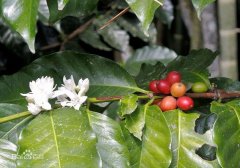
Guatemala Vivetnam fruit producing area coffee ripe beans Guatemalan coffee origin list beans
Guatemala, which is famous for its highland topography, has a unique flavor of high-altitude hard beans that perform well in all-inclusive coffee producing areas and produce high-quality coffee with eye-catching performance. Guatemalan coffee has rich flavor changes and strong acidity, and sometimes can feel some changes in spices, from medium to full consistency, high complexity, is the best representative of complex style.
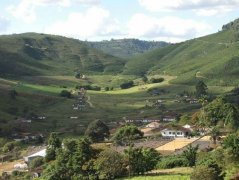
A detailed introduction to the cultivation of Coffee Manors in Central America
Central America knows Central America Coffee Central America is the land bridge connecting North and South America. There are seven countries, namely, Belize, Costa Rica, El Salvador, Guatemala, Honduras, Nicaragua and Panama. Seven Central American countries all produce coffee, with Guatemala, Costa Rica and Honduras among the top 10 coffee exporters in the world. Coffee began to flourish in Central America

An introduction to the flavor and taste characteristics of the coffee producing area of Costa Rica's Saint Roman Coffee Manor.
Costa Rica is located in the Central American isthmus, belonging to North America, 10 north latitude, 84 west longitude. It is bordered by the Caribbean Sea to the east and the North Pacific Ocean to the west, with a coastline of 1290 km (212km on the east coast and 1016 km on the west coast). Costa Rica borders Nicaragua in the north (309 km long border) and Panama (639 km long border) south-southeast. Total

American coffee what are the American coffee producing areas the characteristics of American coffee beans
Professional coffee knowledge exchange more coffee bean information please follow the coffee workshop (Wechat official account cafe_style) understanding Central American Coffee-Central America is the land bridge connecting North and South America, there are seven countries, namely, Belize, Costa Rica, El Salvador, Guatemala, Honduras, Nicaragua and Panama. All seven countries in Central America produce coffee, including Guatemala

A brief introduction to the history and culture of the origin and development of boutique coffee beans in Santa Rita Manor.
The suitable climate in Colombia provides a real natural pasture for coffee. Coffee trees in Colombia are mainly cultivated in the Andes, on steep slopes about 1300 meters above sea level, where the annual temperature is about 18 degrees Celsius, annual rainfall is 2000 to 3000 millimeters, latitude 1-11 15 north, longitude 72-78 west, and the specific range of elevation can exceed 2.000 meters.

A brief introduction to the history and culture of the origin, development and development of fine coffee beans in lemon tree manor
Nicaragua is located in central Central America, bordered by the Pacific Ocean to the west and the Caribbean Sea to the east. The highlands in the north and the coastal plains in the east are part of the Central American volcanic belt. The eastern plain is high-temperature and rainy, with a tropical maritime climate. The suitable climate provides an excellent growth environment for the cultivation of coffee. High-quality Nicaraguan coffee, grown in the north and middle of the country. Coffee is Ni.

Get to know Central American Coffee-- an introduction to Costa Rica Coffee producing areas
For more information on coffee beans, please follow the Coffee Workshop (Wechat official account cafe_style) Central America is a land bridge connecting North and South America. There are seven countries, namely, Belize, Costa Rica, El Salvador, Guatemala, Honduras, Nicaragua and Panama. Coffee is produced in seven Central American countries, including Guatemala, Costa Rica and Acer.

A brief introduction to the History and Culture of the Origin and Development of Fine Coffee beans in moderate acidity Tian Chi Manor in Nicaragua
High-quality Nicaraguan coffee is produced in Madaguelba, Sinodega and Segovia, which is grown in the north and middle of the country. Coffee is a pillar industry in Nicaragua, producing nearly 100,000 tons of coffee beans every year. Many people who have tasted Nicaraguan coffee usually think that it is no different from Salvadoran coffee or Honduran coffee. Its aroma